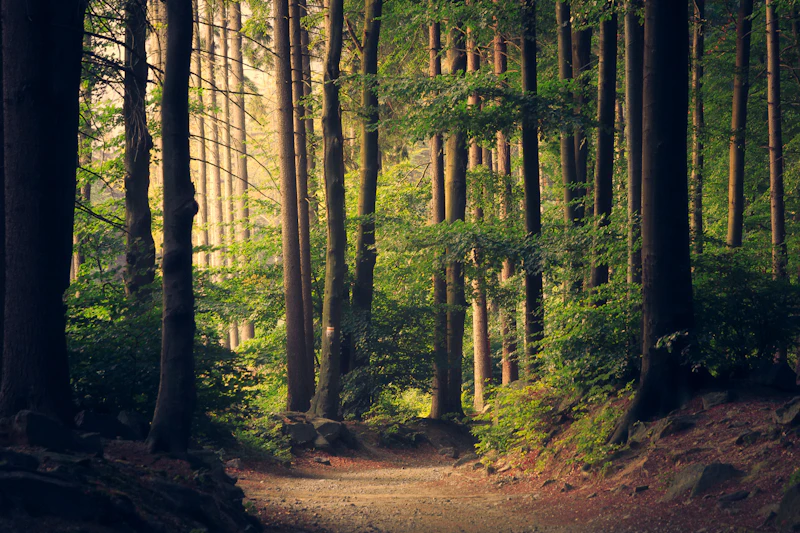
A destination makes certain decisions very easy. The shortest route wins; a delay becomes an inconvenience; unfamiliar streets become mistakes. Remove the destination and the same decisions open out. A patch of sunlight can be a reason to turn left. A quiet bench can be a perfectly good place to stop.
Finding a slower measure
The first few minutes of an unhurried walk can feel strangely unfinished. The mind looks for a task to attach to it: a distance, an errand, a number of steps. There is nothing wrong with those measures, but setting them aside reveals another one. Instead of asking how far the walk has gone, notice how much of the surroundings has begun to register.
Sound often arrives before detail. Shoes meet gravel differently from pavement. Leaves make a low, uneven noise in the wind. A conversation becomes audible and fades again without needing to be followed. Listening gives even a familiar route an edge of uncertainty, the pleasant kind that keeps attention near the present.
The value of a small route
An interesting walk does not require a dramatic landscape. A few streets or a short path through trees can be enough, especially when returned to often. Familiarity supplies a background against which change becomes visible. The shuttered shop is open. The tree has lost its last leaves. A new chair has appeared outside a doorway.
The long way can be a way of arriving, rather than a delay in getting there.
A route can also be adjusted to the day. Choose shelter when the wind is sharp, shade when the sun is strong, or a place with somewhere comfortable to sit. Keep the walk small enough that it remains an invitation. There is no need to turn an ordinary pleasure into a demanding routine.
Coming back
At some point, practical life calls the walk home. The return need not carry a revelation. It may offer only warmer hands, a clearer sense of the weather, or the memory of a particular green. Those are useful things to bring back. A walk can be worthwhile without having taken us anywhere new.