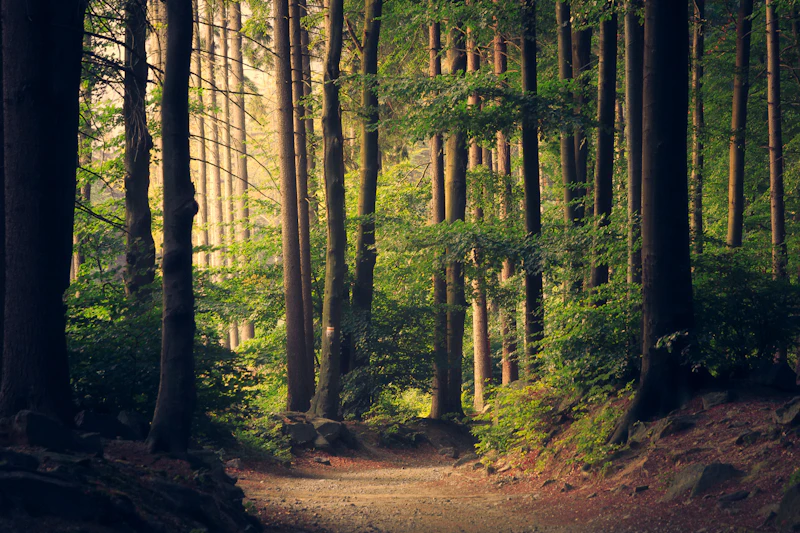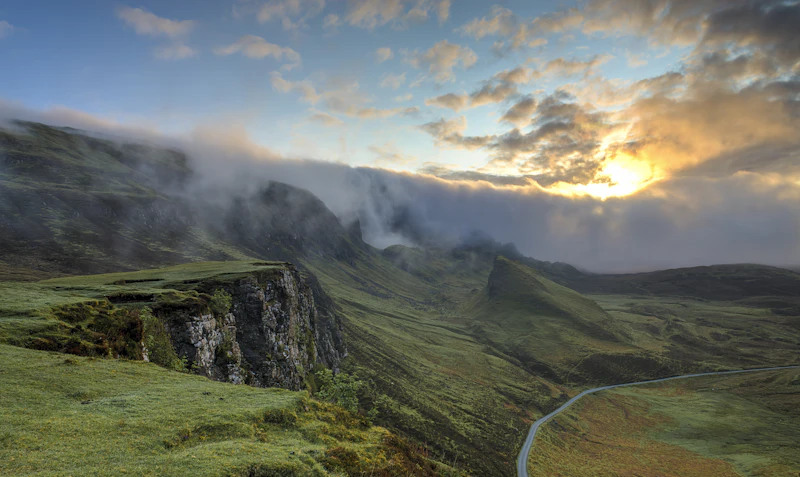
At a distance, a hillside looks like one continuous surface. A closer look separates it into a hundred small differences: a darker stand of trees, a pale seam of grass, cloud lifting from a fold in the ground. None of these details asks for attention. They simply become available when attention has somewhere to settle.
The second glance
There is a familiar habit of arriving somewhere and immediately looking for the best view. A photograph is taken, the place is accounted for, and the next thing begins. The habit is understandable. Time feels limited, and the world contains more than anyone can see. Yet a view and a place are different kinds of experience. The view is available in a moment. The place takes a little time.
Waiting changes what is visible without changing where we stand. A cloud crosses the sun. A path that looked empty becomes a route for insects. Wind reaches the nearest branches a second before it reaches the face. These are modest events, but they give a landscape depth that a single image can only suggest.
Attention does not make the world quieter. It makes more of it available.
A practice without equipment
It can help to begin with one thing rather than an entire scene. Follow the edge of a leaf. Notice where a shadow loses its definition. Look for three different greens in what first appeared to be a single tree. The exercise is not a test of knowledge. Naming the species or recognizing the formation can wait. Looking is already a complete activity.
The same practice works close to home. A familiar window holds a different composition at each hour. Pavement after rain reflects a building that is otherwise hidden behind parked cars. Repetition becomes useful: returning to an ordinary place makes its smaller changes easier to notice.
Leaving room
Not every walk needs to become a lesson, and not every beautiful thing needs to be saved. There is room for an experience that leaves no record beyond a slightly clearer memory of being there. Put the camera away for a minute. Let the weather move. A little longer is often long enough.